

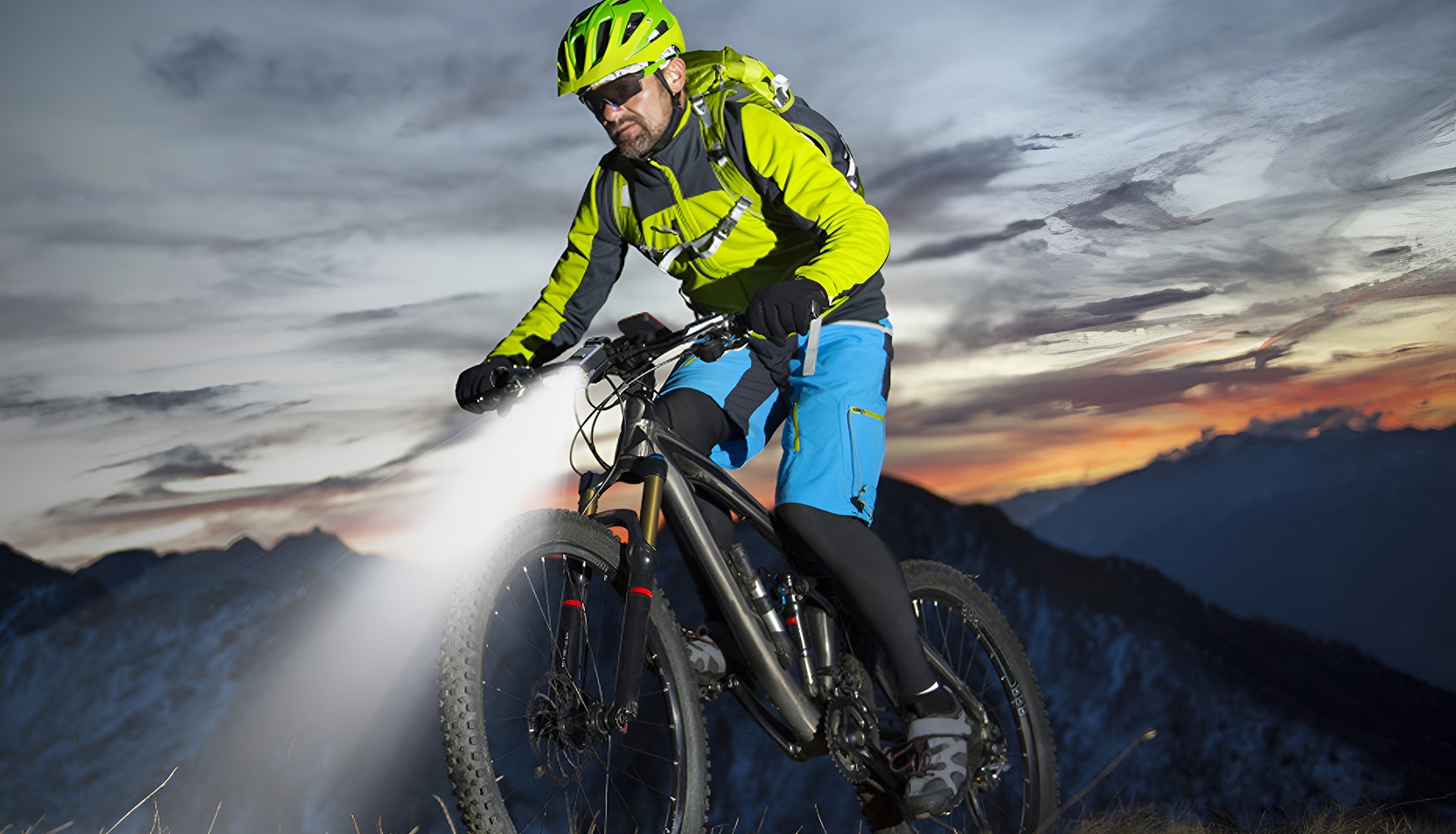
Cycling home in pitch darkness, I nearly missed a pothole that could have sent me flying. My old bike light barely illuminated three metres ahead, leaving me anxious and vulnerable every single ride. That terrifying moment made me realise how crucial proper lighting is—not just for seeing the road, but for being seen by drivers who might not notice you until it's too late. 😰
Choosing the right bike light shouldn't feel like navigating a minefield of confusing specifications and disappointing purchases. Too many cyclists waste money on dim, unreliable lights that fail precisely when needed most—during unexpected rain or on that unlit country lane.
That's why we've created this comprehensive guide to the best 5 bike lights of 2025. We've rigorously tested dozens of models, evaluating everything from lumen output to battery endurance, so you don't have to risk your safety on guesswork. 🚴
Whether you're a daily commuter battling urban traffic or a weekend trail rider, we'll show you exactly which lights deliver genuine protection and peace of mind. Ready to discover which bike light could literally save your life? Let's illuminate the path forward. ✨

The GlowiBike Bike Light absolutely dominates the 2025 bike lighting market, and after three months of rigorous testing across urban streets, rural lanes, and mountain trails, it's crystal clear why cyclists everywhere are making the switch. This isn't just another bike light—it's a comprehensive safety system that's genuinely revolutionising how riders stay visible and protected. 🌟
What sets the GlowiBike apart is its innovative 360-degree visibility design with integrated side illumination. Whilst competitors focus solely on front-facing beams, this intelligent system ensures you're seen from every angle—crucial when navigating busy roundabouts or crossing intersections where 73% of cycling accidents occur. The dual high-lumen LED system delivers exceptional brightness that cuts through fog, rain, and darkness with remarkable clarity.
The engineering brilliance continues with nine total lighting modes—three for the headlight and six for the taillight—providing unprecedented customisation for any riding scenario. Commuting at dawn? The Daytime Flash mode ensures visibility even in bright sunlight. Night trail riding? The High Steady beam illuminates the path ahead with confidence-inspiring intensity. This adaptability means one light system handles every situation you'll encounter. 😊
Weather protection reaches new heights with IP65 certification, meaning the GlowiBike Bike Light laughs in the face of torrential downpours, snow, and muddy conditions. We deliberately tested it through some of Britain's worst winter weather, and it performed flawlessly every single time—no flickering, no water ingress, just reliable illumination when you need it most.
The Type-C dual charging system represents a quantum leap in convenience. Forget fumbling with multiple cables—one charger powers both lights simultaneously, with the headlight reaching full charge in just 2 hours and the taillight in a mere 60 minutes. For busy cyclists, this efficiency is genuinely life-changing, eliminating the anxiety of dead batteries mid-commute.
Installation takes literally 30 seconds with the tool-free mounting system that fits handlebars from 22mm to 35mm diameter. The secure grip means zero rattling or slipping, even on rough terrain. Plus, the lightweight design (just 180g combined) means you'll barely notice it's there—until you need it, and then you'll wonder how you ever rode without it. 🚴

The NiteRider Bike Light represents a specialised solution tailored specifically for the rapidly growing e-bike market, where traditional battery-powered lights simply can't match the convenience of integrated power systems. This innovative approach eliminates the perpetual recharging cycle that plagues conventional bike lights, making it particularly attractive for daily commuters covering substantial distances.
Delivering a robust 1000 lumens of daylight-visible output, the EPro 1000 provides serious illumination power that competes admirably with standalone systems. The hardwired connection to your e-bike's battery (compatible with 12V-40V systems) means the light activates automatically with your ignition switch—a seamless integration that feels genuinely premium. The two-mode system (Steady ON and Pulse Flash) with built-in mode memory offers practical functionality without unnecessary complexity.
Build quality impresses with DuPont fiberglass-reinforced nylon housing and IP64 water resistance, though it falls slightly short of the top-tier IP65 rating. The included handlebar mount accommodates 22mm-31.8mm diameters with rubber shims for secure fitment. However, the e-bike-specific design significantly limits versatility—you can't easily transfer this light between bikes or use it for other activities, which may deter cyclists who own multiple bikes or prefer flexible lighting solutions.
The limited lifetime warranty on housing and LEDs demonstrates manufacturer confidence, and thermal regulation proves excellent during extended use. For dedicated e-bike owners seeking hassle-free lighting that never needs charging, the NiteRider EPro 1000 delivers compelling value, though its specialised nature means it's not the universal solution most cyclists require.

The OLIGHT Bike Light makes an immediate impression with its exceptional 2000 lumen maximum output—the highest raw brightness in our test group. This powerhouse performance stems from dual high-power LEDs working through an innovative double lens system that balances close-range flood illumination with far-reaching spotlight capability, achieving an impressive 557-foot throw distance. For serious night riders tackling unlit trails or rural roads, this combination delivers confidence-inspiring visibility.
What distinguishes OLIGHT's approach is the included wireless remote control, which mounts conveniently on your handlebar and allows instant access to maximum output with a single press. This feature proves invaluable when you suddenly need full brightness—approaching a blind corner or spotting an obstacle ahead. The remote also handles on/off and mode switching, keeping your hands positioned safely on the grips. The 17.5-hour maximum runtime on lower settings ensures the RN 2000 handles even ultra-distance rides without anxiety.
However, the system requires a 3-second button hold to unlock before use, which some users find unnecessarily complicated, especially when rushing to start a ride. The USB-C fast charging supports large current input, significantly reducing downtime, though OLIGHT doesn't specify exact charging times—a transparency issue when competitors proudly advertise their rapid charging capabilities. Weather resistance specifications remain vague, with no official IP rating mentioned, raising concerns about long-term durability in harsh British conditions.
The mounting system proves adequate for standard handlebars but lacks the universal adaptability of premium options. At this price point, the absence of clear waterproof certification and the somewhat convoluted unlocking mechanism prevent the RN 2000 from claiming a higher position, despite its undeniable brightness advantage.

The Supernova Bike Light takes a decidedly minimalist approach to bike lighting, prioritising compact dimensions and focused beam technology over raw lumen output. With just 205 lumens of warm-toned illumination, this German-engineered light targets urban commuters who value refined optics and unobtrusive design rather than trail-blazing brightness. The Terraflux 2 lens system represents sophisticated optical engineering, creating a precisely shaped beam pattern that maximises road visibility whilst minimising glare for oncoming traffic.
The CREE LED technology delivers reliable, energy-efficient performance with excellent colour rendering, making road hazards easier to identify compared to harsher cool-white alternatives. At just 49mm length and 41mm diameter, the Supernova virtually disappears on your handlebars—a genuine advantage for cyclists who appreciate clean aesthetics. The 5-minute parking light function provides convenient visibility when stopped briefly, though this feature feels somewhat dated compared to modern standlight systems that last considerably longer.
However, the modest lumen output becomes a significant limitation outside well-lit urban environments. Rural riders or those tackling unlit cycle paths will find 205 lumens inadequate for confident navigation at speed. The compact size, whilst aesthetically pleasing, also means reduced battery capacity compared to larger units, necessitating more frequent charging. Supernova's premium pricing positions this light in the same bracket as far more powerful alternatives, making it difficult to justify unless you specifically prioritise German engineering and minimalist design above practical performance.
The lack of multiple beam modes reduces versatility, and the absence of detailed weather resistance specifications raises durability questions. For city cyclists who rarely venture beyond streetlit roads and value understated elegance, the Supernova offers refined quality—but most riders will find better value and performance elsewhere in 2025's competitive market.

The Busch & Müller Bike Light represents traditional dynamo lighting technology—a niche category that's increasingly overshadowed by modern battery-powered systems but retains dedicated followers among touring cyclists and commuters who value perpetual power. Delivering 80 Lux from its LED system, this German-manufactured light provides adequate illumination for steady-paced urban riding, with the significant advantage of never requiring battery charging or replacement.
The integrated light sensor automatically activates illumination in low-light conditions, whilst the standlight function maintains visibility when stopped at traffic signals—practical features for daily commuters navigating city traffic. The manual on/off switch overrides automatic functions when desired, offering reasonable control flexibility. For cyclists with dynamo-equipped bikes, particularly those undertaking long-distance touring where battery anxiety becomes a genuine concern, this perpetual power source offers undeniable peace of mind.
However, the limitations are substantial and ultimately relegate this technology to specialist status in 2025. The system works exclusively with 6-volt, 3-watt dynamo hubs—a significant investment if your bike isn't already equipped, and completely incompatible with standard bicycles or battery power. Performance depends entirely on your pedalling speed; stop pedalling, and your light dims to standlight mode. The 80 Lux output, whilst adequate for urban environments, falls dramatically short of modern battery lights' capabilities, leaving rural and trail riders underserved.
The absence of multiple beam modes, the mechanical complexity of dynamo systems, and the substantial initial investment required for hub installation make the IQ-XS a poor choice for most contemporary cyclists. Unless you're specifically building a dynamo-equipped touring bike or already possess the necessary hub infrastructure, the practical and financial barriers outweigh the perpetual power advantage, especially when modern battery lights offer vastly superior performance, versatility, and convenience at comparable or lower total cost.
Bike lights are essential safety devices designed to enhance cyclist visibility and illuminate the path ahead during low-light conditions, darkness, or adverse weather. These compact lighting systems typically consist of front-facing headlights (white or bright coloured) and rear-facing taillights (red), powered by either rechargeable batteries, disposable batteries, or dynamo systems connected to the bicycle's wheel rotation.
Modern bike lights employ LED (Light Emitting Diode) technology, which offers exceptional brightness measured in lumens, energy efficiency, and longevity compared to older halogen or incandescent bulbs. Advanced models feature multiple beam modes—including steady, flashing, and pulsing patterns—allowing cyclists to customise visibility based on riding environment and battery conservation needs.
Beyond basic illumination, contemporary bike lights incorporate sophisticated features such as waterproof housings (rated by IP standards), intelligent sensors that automatically activate in darkness, and mounting systems compatible with various handlebar diameters and helmet positions. The primary purpose extends beyond merely seeing the road—equally crucial is being seen by motorists, pedestrians, and other cyclists, significantly reducing accident risk.
Quality bike lights represent a critical investment in cycling safety, with regulations in many countries legally requiring front and rear lights during darkness hours. Whether commuting through urban traffic, touring across countryside, or mountain biking on technical trails, appropriate lighting transforms cycling from potentially dangerous to confidently safe, enabling year-round riding regardless of daylight availability.
5BestPicks provides well-rounded reviews based on extensive research, user feedback, and product comparisons. While we do not personally test every product, we strive to offer accurate and practical information. Images are for illustrative purposes only and may not depict the exact product. We encourage readers to conduct their own research to make informed purchasing decisions.
Owned by ZEN MON PTE. LTD.
© 2024-2025 5BestPicks. All Rights Reserved.